Take The Sports Car Out Of The Garage!

Once again I was given orders to write something informational like, “3 Ways To Improve The Aerobic System” and “Muscle Spotlight: Shoulder” (I promise I will get to it!).  In my defense I  have a severe case of ADD.  So, instead, I will write about what currently has my very short attention span.  Which is…

The Blend of Art and Science.

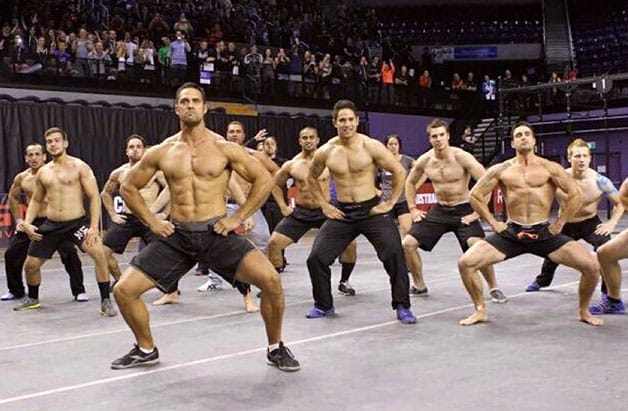
I am obsessed with minds, both past and present, who have seamlessly blended the two.  Examples could be Leonardo da Vinci, Albert Einstein, Steve Jobs, etc.  All of them had the ability to blend Art and Science, and make it look easy.  As if we are all capable of such a thing.  Then I came across this video:

[youtube]http://youtu.be/iWhO4cwriL0[/youtube]

My aha moment came.

You see, my job is to make sure our programing has meaning and is achieving the desirable results for you, our client. Both from a numbers standpoint in strength and endurance, but also biomechanically in regards to movement quality.

Wes, Thomas, and I are always questioning.  Looking for better practices and monitoring the numbers.  Maybe we are looking in the wrong place?

Science is cold and controlled. Art is alive and free flowing.

When the gym is empty, it is cold.  Only when you guys come in does it breathe life.  Yet, we continue to monitor our performance in our controlled setting, the gym!  Maybe you, as clients, only monitor your own fitness in our controlled setting?  Numbers, Numbers, Numbers!

It is similar to the story of the man who buys a sports car just to keep it in the garage.  Most of us fall into the routine of work-gym-home, or some combination of the three.  Our fitness never sees “life”, which is the art.  Use a hobby, recreation, or play in nature! Take the sports car out and let it rip!  Then let us know how it turned out, and how it felt.  Functional fitness is not in the gym.  It is in life!

3 Ways To Improve The Overhead Squat

Let’s be honest, the overhead squat is a constant headache for most CrossFitters.  Yes, there are plenty of other skills that are much more complex, such as the muscle-up, hand-stand walks, and all that other jazz, but  the general population involved in CrossFit to simply get in shape will not be doing those movements.  The overhead squat is different. This is a movement that we see everyday in Met-cons, from Level 1 Foundations all the way to Level 3 Competitive. We are exposed to this movement a lot, which means a higher percentage of people doing it wrong.  You way be looking in the wrong spots to become more proficient at the overhead squat.

Ankle Flexibility

This is not typically the one that people look at first, but being an Olympic Weightlifting Coach and knowing what the Weightlifting shoes do for people, this is usually my first observation.  One of the hardest things to do in the overhead squat is to keep the torso upright.  To some extent, we can get away with the torso being slightly forward in the traditional back squat or front squat.  In the overhead squat the torso angle directly affects the shoulder angle in attempting to keep the bar over our hips.  The inability of the ankles to properly dorsiflex will cause the hips to rise when attempting full depth, which will push your torso forward and put your shoulders in a less than desirable position.  An easy fix for this would be raising the heal with a 5kg plate or the use of weightlifting shoes.  No matter what, you must continue to work on ankle flexibility.  I have had some fantastic luck with voodoo floss around the ankles and inch-worms.

Thoracic Spine Mobility

Many of the athletes at CFA have heard this over and over, but it is important.  Often tightness and hyperkyphosis here will make the overhead position impossible. You can also identify if you have a “pivot point” in your spine.  Athletes will commonly get extension from a certain location on the spine, which neglects the other vertebrae.  To test this lie on your stomach and press up with you arms.  You should theoretically have a nice fluid curvature of the spine, but sometimes you will see the back angle more aggressively (usually in the lumbar spine), and other locations with much less extension (usually the thoracic spine).  If you see this in yourself, chances are you are trying to get extension from your lumbar spine that you should be getting from your thoracic spine.  By simply getting into that position for 30 minutes a night while you watch T.V. and focusing on letting your t-spine and shoulder blades relax , will make a difference.  You can also try getting a half foam roller or a rolled up towel and lie on it with your spine perpendicular to it. Start it at the bottom of your T-spine and work your way up to the top, lying flat and trying to relax your back around the roll. Lastly,  regular foam rolling up and down the T-spine will help mobilize it.

Strength

This last one is probably the most important.  The fact is that you have to be strong to do this movement.  I have seen plenty of individuals with the flexibility to get into great positions, but can barely support the PVC pipe.  This takes patience. You must build up your strength and mobility before pushing your self into a position that you are not prepared for.  If you force bad positions simply to get full range of motion in a work-out, you are heading backwards in your fight to be a bad-ass.  In the world of CrossFit there is a constant pressure to become proficient in many movements, really fast.  That’s not the way it works for most individuals.  So remember, Air Squat>Back Squat>Front Squat>Overhead Squat.  When you work through that progression and you find difficulty in a certain movement, THEN YOU STOP.  If you have overhead squats in a workout and you do not feel comfortable enough, especially at high intensity, then work your way down the progression until you do.  This goes for all movements in CrossFit.  In your off time work on your strength and flexibility at a low intensity, and you will be there in no time.

-Coach Thomas Lower

Beyond The Bar PodCast Episode 6 – Mudz

Click to listen

Today we welcome Mahdi Te Heuheu aka “Mudz” to CrossFit Austin! Mudz is visiting CFA from his home in New Zealand, and will be hanging out for the next 2 weeks. Mudz finished the Australian Regional of the CrossFit Games in 7th place and has been working with CFA Director of Training Aaron Davis for the past year.  In this episode we get a closer look of the evolution, and work ethic of one of the fittest Kiwi’s on the planet!


mudz

Program Update for July/August

Programming update for the next 4 weeks

Today’s article is short and sweet. We enter into the final 4 weeks of our 8 week cycle with a focus on work capacity. More specifically, we focus on our ability to work through fatigue, manage blood lactate, and push outside of our comfort zone.  This cycle will also mark the 2nd week of Olympic lifts focused on the “hip” position, as well as continued  skill work on kipping pull-ups and overhead squats. Below is a day by day overview of what our next 4 weeks will look like.

Monday
– Olympic Lifts from the hip
– Conditioning aimed to improve aerobic capacity at higher intensities, efficiency, and resilience to fatigue

Tuesday
– Overhead and Gymnastics skill work
– Conditioning aimed to improve aerobic capacity at higher intensities, efficiency, and resilience to fatigue

Wednesday
– Olympic Lifts from the hip
– Short and hard  interval work designed to improve top end work capacity at higher intensities, as well the ability to actually work at higher intensities

Thursday
– Full body strength work with a focus on squatting, bending, and horizontal pressing

Friday
– Fundamental skill work
– Longer conditioning bouts aimed at improving resilience to fatigue, the ability to recover, and the ability to recover actively

Saturday
– Longer conditioning bouts aimed at improving resilience to fatigue, the ability to recover, and the ability to recover actively

Lets get ready to work, folks.  Should be a great 4 weeks!


-Coach Wes

3 Simple Exercises to Improve Ankle Function

On Tuesday’s podcast we spent a full hour on how to start “building a base” for your fitness. By the end we agreed on a theoretical continuum for the concept that basically amounted to the following:

Great Movement Quality  —> Strength —-> Aerobic Capacity

Today I want to start focusing on how to build a base for great movement quality. One of the most common mobility issues we see in the gym is a lack of dorsiflexion at the ankle. In common terms, the dorsiflexion is the ability pull the top of your foot closer to your shin.

Lack of dorsiflexion affects several movements. It primarily affects our ability to squat and run efficiently, and to a lesser extent our ability to get into a strong set position for a clean, snatch, or deadlift. Why is this problematic? Simply put, when you lack health appropriate range of motion (ROM) in a joint your body will try and find that ROM elsewhere.  That can be anything from the low back, knees, or shoulders depending on the movement.

So that raises the question, what can we do? For starters be patient! Immobile ankles aren’t a quick fix.  Go into the journey to supple ankles knowing that consistent effort over the long haul is going to yield the best results. Also, to improve make sure you’re wearing the appropriate foot wear. A discussion on proper footwear is outside the scope of this article, but know that high heels, flip flops, vibrams, and cushiony running/basketball shoes aren’t your friends when it comes to proper foot and ankle function. Go for a combination of a low profile cross trainers, like the Reebok Nano or the Nike Free, and a good set of weightlifting shoes.

In terms or exercises for the ankle, we want to take a 3 pronged attack:

  1. Self myofascial release (lacrosse/soft ball rolling and foam rolling)

  2. Flexibility exercises for the calves

  3. Direct mobility work for the ankle joint

Here are simple videos for each category of attacking you ankle ROM. Doing these 3 simple things daily will dramatically improve your ankle function. Enjoy!

  1. Self myofascial release

  2. Flexibility

  3. Mobility


-Coach Wes

Beyond The Bar Podcast Episode 5 – Building a Base

Click to listen

In today’s Beyond the Bar podcast Aaron and Wes discuss the importance of “building a base” in the sport of CrossFit, and in general fitness. The guys discuss a theoretical continuum of movement quality, strength, and aerobic capacity as ideal stepping stones for an athlete.

Program note: Many of you have asked if our Podcast is on iTunes.  We are currently in the process and hope to have it done by our next Podcast. Stay tuned!

Miguel-e1354051012554