17.4/16.4
Complete as many rounds and reps as possible in 13 minutes of:
55 deadlifts, 225 lb.
55 wall-ball shots, 20-lb. ball to 10-ft. target
55-calorie row
55 handstand push-ups
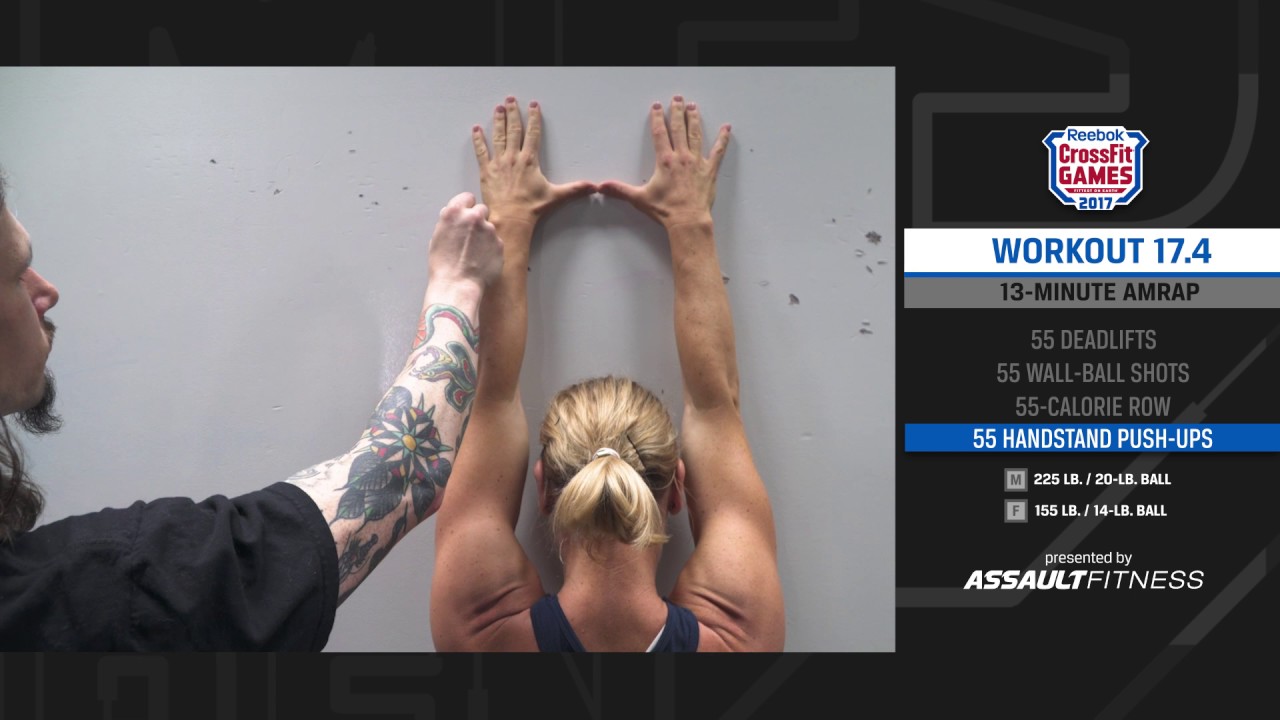

17.4/16.4
Complete as many rounds and reps as possible in 13 minutes of:
55 deadlifts, 225 lb.
55 wall-ball shots, 20-lb. ball to 10-ft. target
55-calorie row
55 handstand push-ups
A. Skill Practice Warm Up: 30s of hollow rocks, 30s rest, 4 rounds
B. 14:00 EMOM
Min 1 – 2 Back Squat @ 70-80%
Min 2 – 4/arm Single Arm Ring Row
*all sets across %
C. 7:00 AMRAP
1, 2, 3, etc.
dumbbell shoulder press 45 / 25 /15
40 ft dumbbell overhead carry (20′ out, 20′ back)
40 ft broad jump between each shoulder set (20′ out, 20′ back)
Optional ‘Cash Out’:
2 rounds
1:00 row for cal
:30 Rest
1:00 db clusters @ 45 / 25 / 15
:30 Rest
This gal exemplifies everything that is great about our community. She attends class several times a week and is encouraging of her classmates. She is constantly trying to improve and trains 1-on-1 two to four times a month. She attends events for the gym and of other community members. She travels and expresses her fitness on those travels! Ask her about her most recent hiking adventure. You rock Kristy, keep it up!
-Coach Tim
A. For Time
Rope Climbs @ 3/2
600m Row
30 Overhead Squats @ 95 / 65 / 35
600m Run
30’ right arm, 30’ left arm KB overhead walking lunge @ 16K / 12K / 8K
16 Kipping handstand push-ups (Scale: AbMats or Seated DB Press)
30 Box Jumps @ 24 / 20 / 12
60 American KBS @ 16K / 12K / 8K
*25:00 Cap
*time recorded
Scaling Guide:
– Goal finish time 18-22 minutes.
– Scale-up: 5 rope climbs, 1000m row, 26 HSPU (women do 16 head to floor), 50 box jumps, 53lb kettlebell swing. . . same time limit.
New swag is here! If you pre-ordered you can pick up in the front room. If you didn’t….
There are extras 😉 Get your gear!
A. 15:00 EMOM
Min 1 – 3 Power Clean
Min 2 – 3 WTD Strict Pull-up
Min 3 – Rest
*build to a max weight in both mvmts, weights recorded
B. 8 minute AMRAP
2-4-6-8…etc
Hang Power Cleans @ 95 / 65 / 35
Toes-to-bar
40′ bear crawl (20′ out and 20′ back, each 20′ counts as a ‘rep’)
(e.g. 2 hang power cleans, 2 toes-to-bar, 40′ bear crawl, 4 HPC, 4 T2B, 40′ bear crawl, 6 HPC, 6 T2B, 40′ bear crawl, etc.)
*total reps recorded
Optional ‘Cash Out’:
2 Rounds AFAP
15 Pull-ups
20 Wall Balls
Scaling Guide:
80 – 200 reps
A. Spend appx 8:00 of practicing / learning pistols or pistol progressions
then…
E:90 O:90
3 Pistols (or progression) / Leg x 5 Sets
B. 16:00 EMOM
Min 1 – 1 Back Squat @ 70-80%
Min 2 – 3/arm Single Arm Ring Row
*all sets across %
C. 7:00 AMRAP
30 Back Squats @ 155 / 95 / 55
Max DUs in remaining time
*total reps recorded
Optional ‘Cash Out’: Tabata Row or Assault Bike
Scaling Guide:
– 100-350 reps.
– You might want to think about scaling up the weight if you are a good squatter and you don’t want to do hundreds of double unders.
“The present time has one advantage over every other – it is our own.” -Charles Caleb Colton

A. In 10:00 Build to a max or near max (85-95%) Clean and Jerk
Then…
6:00 E2O2
3 C&Js @ 50-60%
B. 8:00 AMRAP
10 clean and jerks @ 155 / 95 / 65
Then max rounds with the remaining time:
6 Left, 6 right, single arm Russian KBS @ 24K / 16K / 12K
6 goblet squats (same)
4 reps of 15′ out, 15′ back lateral shuffle with line touch
6 ring push-ups
2:00 Rest
8:00 AMRAP
10 clean and jerks @ 155 / 95 / 65
Then max rounds with the remaining time:
6 Left, 6 right, single arm Russian KBS @ 24K / 16K / 12K
6 goblet squats (same)
4 reps of 15′ out, 15′ back lateral shuffle with line touch
6 ring push-ups
*total rounds combined in both amraps is your final score.
Scaling Guide:
– 7 – 10 rounds, about 1:30 per round after the clean and jerks.
– Scale Up: Kb hang snatches instead of swings and 10/6 ring dips instead of push-ups.
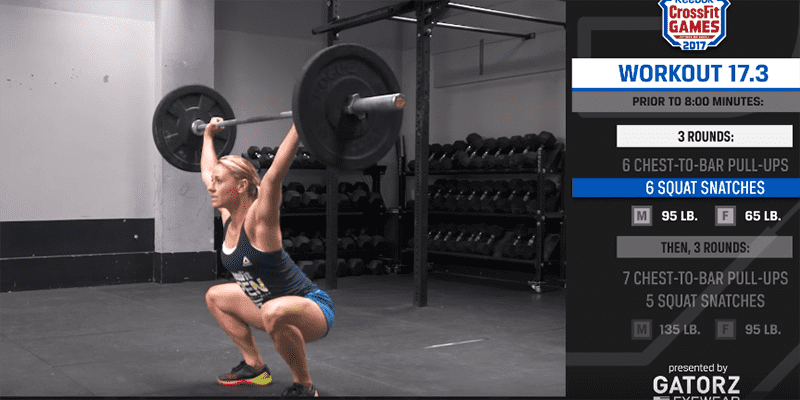
Prior to 8:00, complete:
3 rounds of:
6 chest-to-bar pull-ups
6 squat snatches, 95 lb.
Then, 3 rounds of:
7 chest-to-bar pull-ups
5 squat snatches, 135 lb.
*Prior to 12:00, complete 3 rounds of:
8 chest-to-bar pull-ups
4 squat snatches, 185 lb.
*Prior to 16:00, complete 3 rounds of:
9 chest-to-bar pull-ups
3 squat snatches, 225 lb.
*Prior to 20:00, complete 3 rounds of:
10 chest-to-bar pull-ups
2 squat snatches, 245 lb.
Prior to 24:00, complete 3 rounds of:
11 chest-to-bar pull-ups
1 squat snatch 265 lb.
*If all reps are completed, time cap extends by 4 minutes.
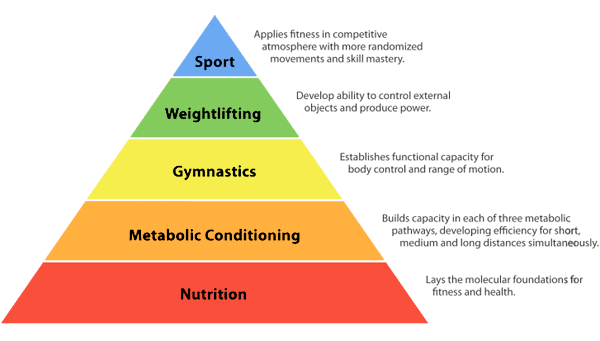
This is the second article in our “Fitness Fundamentals” series, last week in part one we addressed Nutrition. These articles are for those just starting a health and fitness journey who need simple actionable advice to start improving right away. For those whom fitness is already an active part of their lives, fundamentals are something that should be revisited consistently to make sure the foundation of our hard work remains solid in support of our goals.
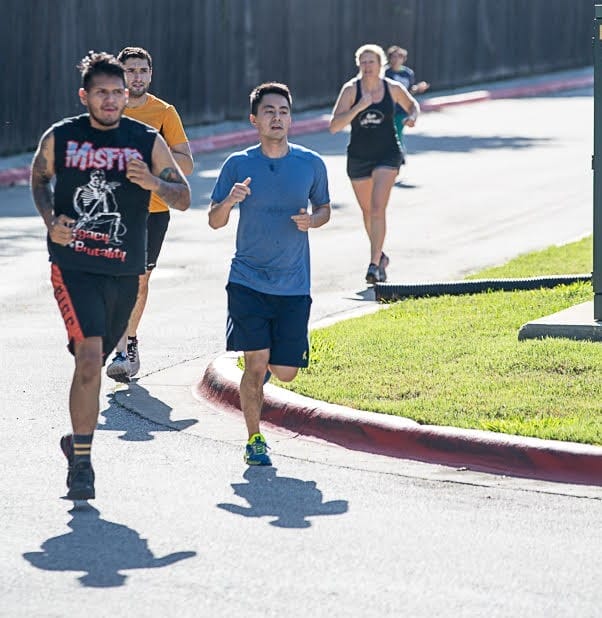
Today we address “Metabolic conditioning” or just “conditioning”. This type of exercise goes by many names but I like to think of it as exercise that is limited or regulated by your ability to breath or control your heart rate. Most new to fitness will recognize this as “Cardio”.
Crawl before you walk…
And more importantly walk before you run. Walking is one of the most beneficial types of exercise most of us tend to neglect. Walking improves aerobic capacity, aids in recovery, provides mental stress relief, and is just generally good for your soul. For folks who are just getting back into training (or starting for the first time) walking is a great way to prepare and progress your feet into higher impact movements like running.
Action step:
Add a 60-90 minute walk 3 days a week to your routine. Preferably find a great park or some nature to make it an even more enjoyable cathartic experience. For those just beginning this is a very important first step into actual exercise that should not be downplayed. For those of you currently training hard, walking provides mental and physical recovery from the higher intensity work you’re used to.
Variety is the spice of life
Despite what conventional wisdom suggest there are far more injuries involved in distance running than weightlifting. Why is it that throwing 300 lbs over your head is statistically safer than going for a jog? The short answer is because distance running imposes repetitive stress on the same muscle groups, ligaments, and tendons over and over again that is absent in competitive weightlifting. The key point is doing the same thing all the time eventually breaks down specific areas of your body’s structure. This can be avoided by learning and applying a wide variety of movements into your training program.
Action step:
If running or jogging represent your entire conditioning training take the time you normally run and do a different movement. If you have access to equipment you could row, bike, or swim in lieu of running. You can also sub a simple bodyweight exercise like burpees. For my hard charging CrossFitters sometimes what looks like variety can also become repetitive stress. I challenge you to take a week to do the opposite. Only run, bike, swim, or row the times prescribed (or average time of completion) of the WOD and see how it differs from your normal training.
Go Slow and Fast
Finally the importance of varying intensities is important as well. Most inexperienced trainees have the “more is better” mentality so ingrained, that junk miles and slowish work dominates they’re conditioning training. The goal should be a balance of short fast sprint type work, medium to moderate effort work at a challenging pace, and longer slower work.
Action step:
Here is a weekly template that can be utilized today by anybody at any skill level:
Monday:
20 Rounds
:10 Sprint @ 100% effort
:50 Rest
Tuesday:
5 Rounds
5:00 of work @ at challenging, but sustainable effort (hit the same distance / total work each round)
7:00 Rest
Wednesday:
20-30 minutes @ steady state / pace
Thursday
Rest
Friday:
4 Rounds
2:00 work @ As fast as possible
Rest until you feel 100% (typically 5-10 minutes)
Saturday:
20-30 minutes @ steady state / pace
Sunday:
Rest
**Walk 60-90 minute 2-3 times a week either on rest days or after training”
**Any type of exercise can be used for this but rowing, running, biking, or swimming will yield the best results. Running is not suggested for someone brand new to training, or who is overweight.
Thanks for stopping in! Our next installment we will discuss gymnastics and bodyweight only training.
A. 8:00 E202
4-6 TTBs
B. In 20:00 Minutes or less
25-20-15-10-5
Step-ups / leg @ 20” / 16” / 12”
Russian KBS @ 24K / 16K / 12K
Ball Slams @ 10 lbs
*no time recorded
Optional ‘Cash Out’:
3 rounds
10 chest-to-bar pull-ups
15 wallball shots

A. 8:00 work on Ring Dip or Strict MU progressions
Then…
8:00 E202
2-5 Ring Dips or Strict MU progressions
B. 18:00 EMOM
Min 1 – 3 Back Squats @ 60-70%
Min 2- 5 / arm SA Ring Rows
Min 3 – Rest
C. 4:00 AMRAP
10 Thrusters @ 95 / 65 / 45
30 DUs (60 Singles)
*Time recorded
“Don’t wait for extraordinary opportunities. Seize common occasions and make them great. Weak men wait for opportunities; strong men make them.” -Orison Swett Marden