B. 3 Rounds
5 Muscle-ups
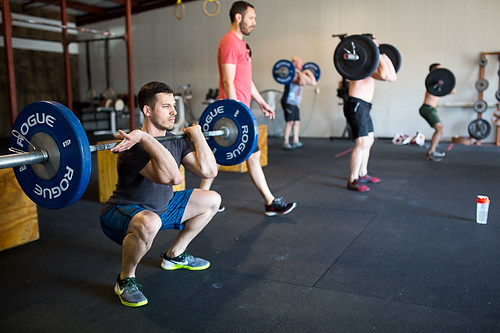
10 Power Clean to OVHD @ 135 / 95
50 Double Unders
*15:00 Time Cap
**Test Day**
“If you’re playing within your capability, what’s the point? If you’re not pushing your own technique to its own limits with the risk that it might just crumble at any moment, then you’re not really doing your job.” –Nigel Kennedy
Deep inside all of us, there’s a desire of wanting to accomplish certain fitness/health goals; however, a lot of times we find ourselves never reaching these goals. I personally think it is because we often forget to look back on how far we have actually come and only focus on how far we still have to go. This in return leads us to losing our motivational drive. If you currently find yourself in this situation or have found yourself in this situation, you’re not alone, it happens to all of us. Here are a few simple tips to help you stay on track.
Write down your goals and explain WHY these goals are important to you. Goals are important to have in order to know what course of action you need to take. The “why” is just as important because this involves the emotions that serve as your motivational force and it’s this force that will drive your efforts towards fulfilling your goals.
Schedule your weekly routine. Commit to certain days and times, mark it on your calendar and make it happen. Also, if you are someone who prefers evening workouts, but often find yourself stuck in traffic or in the office, try getting your workout done in the morning.
Start small. If you’re new to the program or had a minor set back and are just now finding your way back into the gym, don’t think you can pick up where you left off. Take it easy, scale, modify and make each workout count. Remember, go at your own pace and always practice quality over quantity.
Find an accountability partner. Find someone within your class that you know will hold you accountable and will push you out of your comfort zone and motivate you. I personally always liked to buddy up with someone stronger or faster than me because it pushed me to work a little harder.
Journal your progress. This will allow you to track your progress and milestones. It also helps you remember the appropriate weight to use for a workout. Using the appropriate weight is important for progression.
Rest/Recovery – most important part of your routine, yet the most overlooked. Lack of rest leads to overtraining, injury, and becoming burnt out. Overtraining not only affects our muscular and cardiovascular systems but also our hormonal, nervous, immune, and endocrine systems. So enjoy a day or 2 of active recovery a week, remember, it will do more good than harm.
Change it up and change your scenery. Enjoy nature and go out for a hike or a jog/walk or take a yoga class or Oly class (wink wink).
Reward yourself for your accomplishments. Make sure the reward is non-edible; instead of a cupcake, buy a new pair of workout shoes or outfit or treat yourself to a massage for that matter.
Keep a great attitude and enjoy the journey.
Remember, the reward is much bigger than the sacrifices being made.Keep in mind that your health and fitness journey is for a lifetime, so be kind and patient with yourself, and know that there’s going to bumps along the way. If or when you find yourself off course, revert to these tips to help you regain your enthusiasm.
“Once upon a time there were three little pigs. One pig built a house of straw while the second pig built his house with sticks. They built their houses very quickly and then sang and danced all day because they were lazy. The third little pig worked hard all day and built his house with bricks.
A big bad wolf saw the two little pigs while they danced and played and thought, “What juicy tender meals they will make!” He chased the two pigs and they ran and hid in their houses. The big bad wolf went to the first house and huffed and puffed and blew the house down in minutes. The frightened little pig ran to the second pig’s house that was made of sticks. The big bad wolf now came to this house and huffed and puffed and blew the house down in hardly any time. Now, the two little pigs were terrified and ran to the third pig’s house that was made of bricks.
The big bad wolf tried to huff and puff and blow the house down, but he could not. He kept trying for hours but the house was very strong and the little pigs were safe inside. He tried to enter through the chimney but the third little pig boiled a big pot of water and kept it below the chimney. The wolf fell into it and died.
The two little pigs now felt sorry for having been so lazy. They too built their houses with bricks and lived happily ever after.”
We’ve all heard some version of this story, at least those of us that grew up before Facebook and Instagram. What if we take this story, change the characters and details up a bit, and then apply the general theme of the story to your training regimen? What does that look like…sticks, or bricks?
Over the years I’ve witnessed the evolution and devolution of people walking in and out of the doors of different gyms. The ones that stick with it for the long haul and make it a part of their lifestyle seem to approach things a bit differently than the other folks. That doesn’t mean they didn’t attempt to build a house of straw or sticks before they got wise and started laying down the bricks. What it does mean, is that they eventually found a better/more sustainable way of building their house. The goal of this article is to hopefully save someone the time (and possibly money) trying to build that new house, or remodel an existing one with more sustainable materials. The sustainability may just start with your blueprint…your paradigm or the way you approach things at the gym.
The straw and stick village residents occasionally take the shortcuts. You may know these folks. They may slack on their warm-up, cut reps here and there, or forfeit sets and reps that could be used to improve their range of motion and stability for sloppy form and heavier weight. We can all fall victim to these things on any given day. Those who have been on their fitness journeys for some time know when they have been slacking on the little things. If the house starts to creak, something might be a little out of whack.
All that huffin’ and puffin’ without a solid foundation can lead to injury and a demolished housed. Let’s work hard, train smart and do the little individual things/maintenance that each and every house needs. I challenge you take to the time, ask the questions and put in the work to build the best house you can. I challenge you to you to not brush off the “easy” skill work, but to embrace some of the different drills that can improve your overall skill set. Even if you can perform a skill, strive for improvement and more proficiency. Re-evaluate, re-assess. Build your house out of bricks. Those “modified” drills just might be the bricks your house needs to bust through an annoying plateau.
Warm-up. Cool-down. Improve stability throughout a proper range of motion. Skills and drills. Rest. Refuel. Recover. Repeat. Build a strong and secure foundations. Lay bricks!